Raymer Society Consignment Art Auction
Lot 91:
Sold for: $1,200
Description
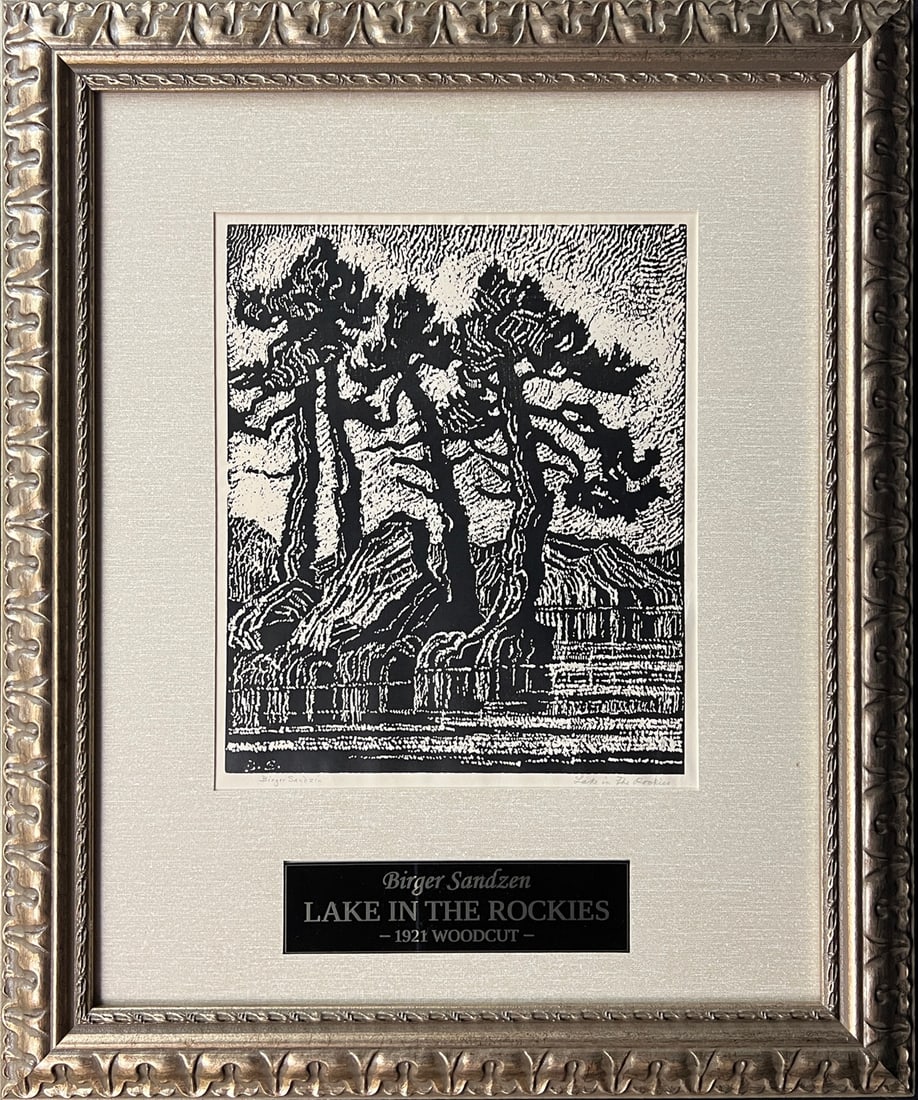
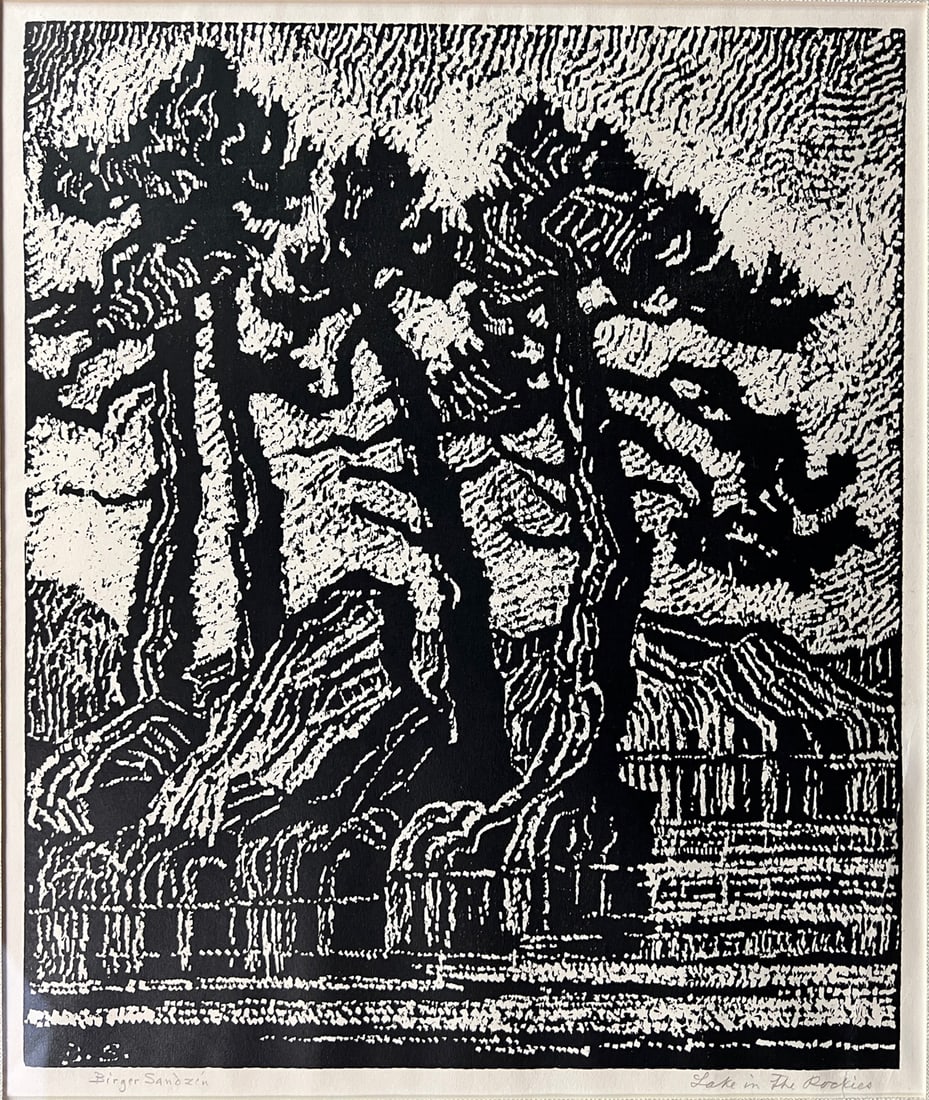
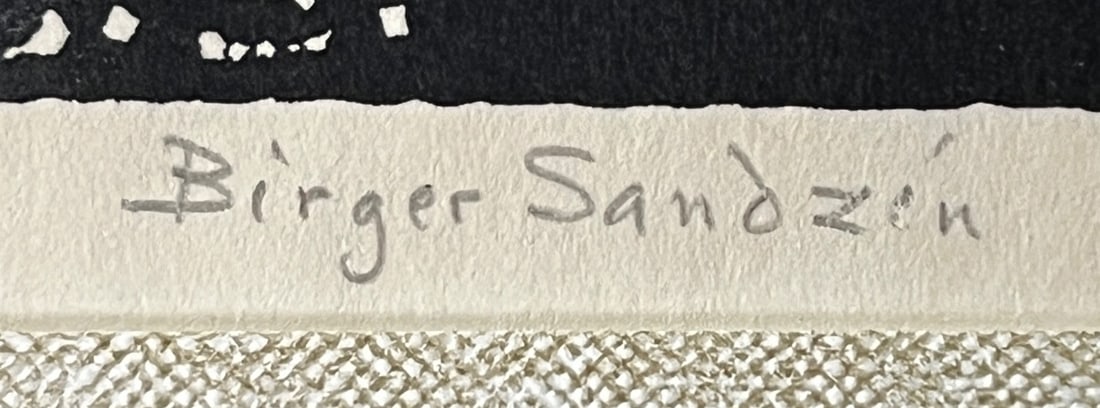
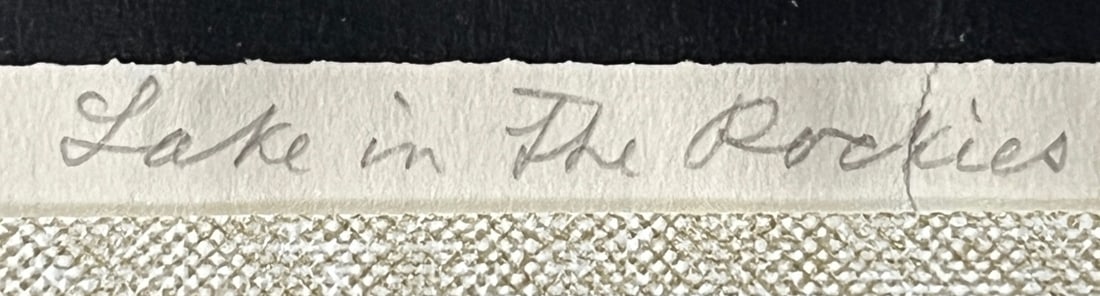
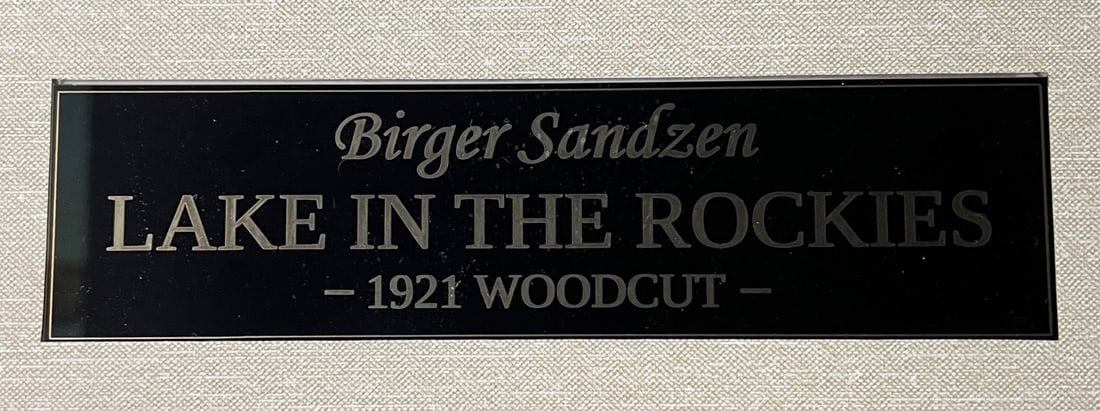
Sandzen, Birger (1871-1954) 1921 wood cut, Lake in the Rockies, pencil signed Birger Sandzen in lower left, good condition, not examined out of frame, image size: 12 x 10 inches. Birger Sandzen had a long distinguished career as an art professor at Bethany College in Lindsborg, Kansas and as an impressionist landscape painter. He is best known for his modernist style with masses of paint, akin to that of Vincent Van Gogh and Paul Cezanne, and for Rocky Mountain Landscape subjects. His early work is Tonalist in style in the manner of Scandinavian Romanticism, but after he began taking trips to Colorado, his work became much more Expressionist and brightly colored.Sven Birger Sandzen was born in Blidsberg, Sweden to Clara Elizabeth and Johan Peter Sandzen. His mother had studied drawing and his father, a minister, enjoyed writing poetry and playing the violin. When Birger’s parents noticed his artistic inclination, they asked a young minister to give drawing lessons to the nine year old. At the age of ten, he attended the College and Academy of Skara. Here his drawing and painting lessons continued under Olof Erlandsson, a graduate of the Royal Academy at Stockholm. After graduation from Skara College, Sandzen spent a semester at Lund University attending art history lectures and continuing the study of French. Following Lund University he went to the technical high school at Stockholm, where he studied perspective and form drawing. Sandzen joined a group of young artists and they rented a studio at Anders Zorn’s suggestion. They received instruction from Anders as well as Richard Bergh, a well-known portrait painter and Per Hasselberg, one of Sweden’s best sculptors. A doctor from the Caroline Medical Institute of Stockholm gave anatomy lessons. These young artists formed "The Art School of the Artists’ League" which played an important part in the development of modern Swedish art.In the summer of 1894 Sandzen returned to Sweden where he read the book entitled I Sverige by a young Swedish-American educator, Dr. Carl A. Swensson. Dr. Swensson, a college president, told of his struggles on the plains of Kansas and he challenged other young Swedes to come help him. Sandzen was excited by the proposition and wrote Dr. Swensson a letter asking if he could use a young artist who could sing tenor and teach French. As soon as Sandzen received the cable offering him a job, he accepted and arrived in Lindsborg, Kansas the day college opened in the fall.Birger soon realized Lindborg was where he wanted to make his home with the inspiring atmosphere of the new College and energy of the young teachers and president. He built a home, where he continued to live for fifty-four years. In 1900 he married Augusta Alfrida Leksell, a gifted pianist. They had one daughter, Margaret Elizabeth.With time Sandzen became more and more involved in teaching, even his evenings were reserved for class time. At around nine or ten in the evening he would find time for his own drawing. Sandzen’s inspiration came from his summers spent in Colorado, Utah, and New Mexico.Sandzen spent his time trying to generate an interest in art by talking to people about art, organizing exhibitions and establishing art clubs. He donated artwork to the local art club to help raise money for the purchasing of art books for the library, the financing of exhibitions, and the occasional awarding of a scholarship.
Condition: good condition, not examined out of frame
Dimensions: 24 x 20 x 1 in
Weight: 5.3 lb
Share this lot: