Raymer Society Consignment Art Auction
Lot 83:
Description
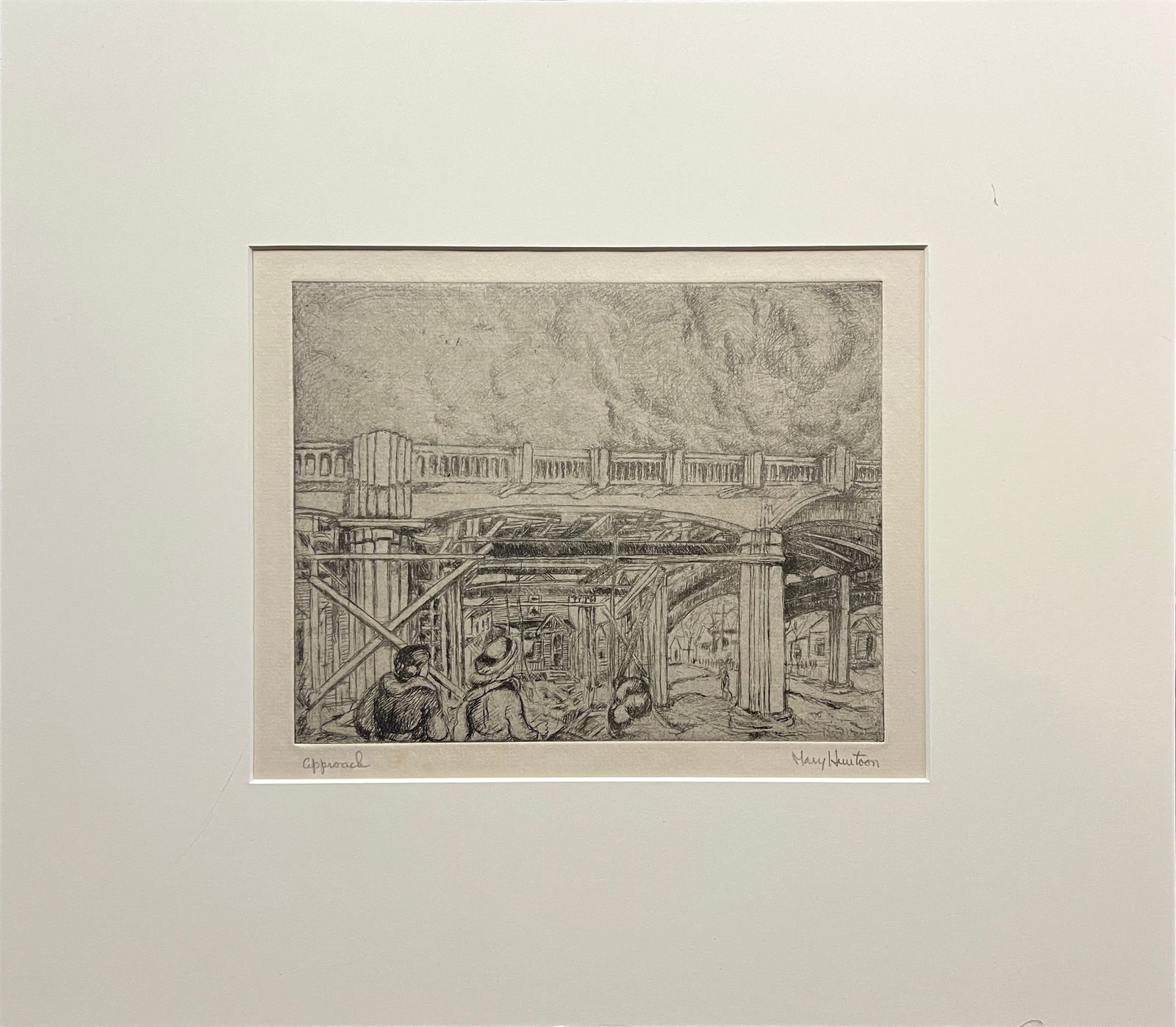
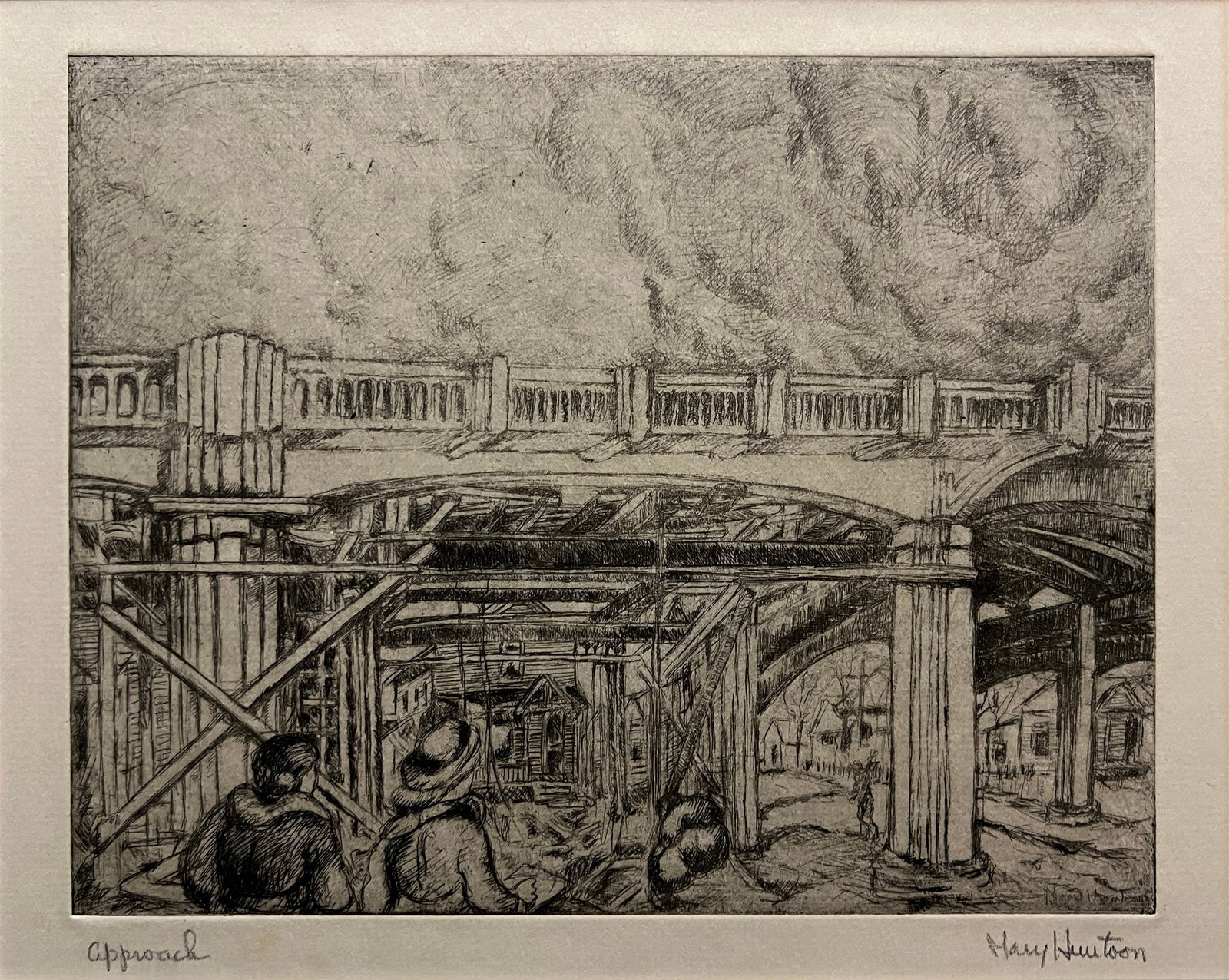
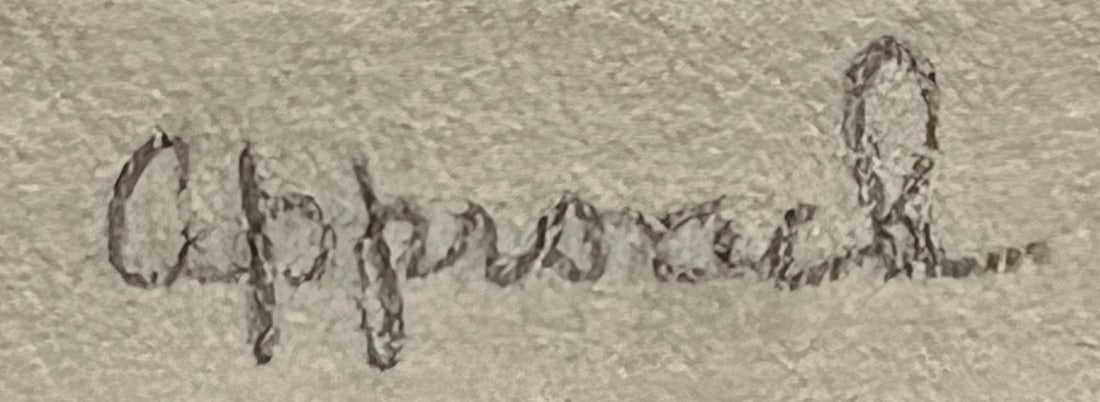
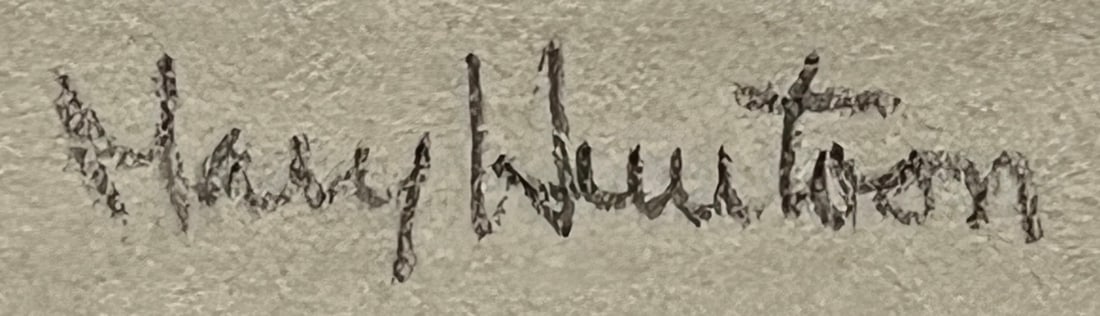
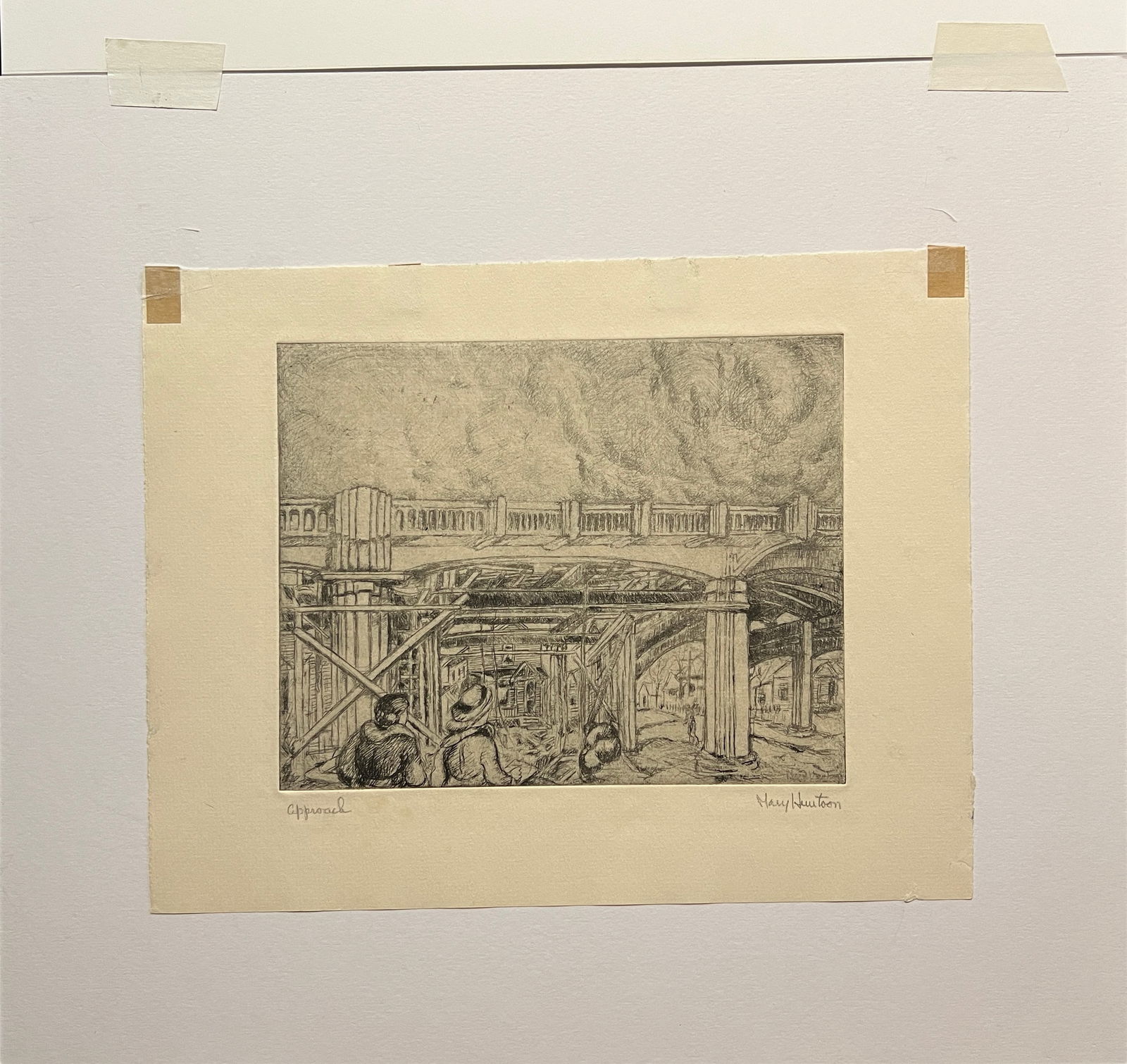
Huntoon, Mary (1896-1970) Approach, WPA etching, pencil signed in lower right, good contition, mat with no frame, image size: 7 x 8.75 inches. Mary Huntoon was among the most innovative of Topeka’s artists. Born Mary Huntoon Atkinson, she was the daughter of Ruth Huntoon Atkinson and Franklin Henry Atkinson and the descendent of prominent Topeka pioneer, Joel Huntoon. Huntoon spent six years of her childhood on the cattle ranch of her grandfather, Fred Huntoon, in Beaver County (No Man’s Land), Oklahoma. At age twelve, she was rechristened Mary Huntoon Parsons and adopted by her mother’s second husband, Harvey Greely Parsons.Huntoon was inspired to develop her artistic ability by her stepfather, Harvey Parsons, a cartoonist and columnist in Topeka. Huntoon’s academic training began at Washburn University where she earned her degree in art in 1920. Huntoon studied with portraitist and founder of the art school at Washburn, Kansas artist George M. Stone. She continued her studies at The Art Students League in New York, and grew as an artist under instructors Robert Henri, George Bridgman, Frank Vincent Du Mond, and Joseph Pennell. Pennell persuaded her to travel to Paris where she reputedly introduced Stanley Hayter to printmaking techniques. Living in the Latin Quarter for five years, Huntoon sketched the buildings, people, and surrounding city scenes in which she lived. Her works were exhibited in the Salon d’Automne of 1929, as well as at the Salon des Indépendants. Huntoon’s first one-artist show was in Paris at the Galerie Sacre du Printemps in 1929.Despite these distinguished connections, Huntoon’s gender seemed to be a detriment. Under an assumed name, Huntoon’s husband, a former reporter, mocked a reviewer’s praise of her work in a letter to the editor of a Paris newspaper. He stated that "No women (sic) has distinguished herself in 5,000 years and it is a little too late to begin to hope." Public outcry at this misogynistic rant prompted record crowds at the exhibition, which was exactly the intended effect.Huntoon returned to Topeka in 1934 where she taught at her alma mater, Washburn College. She became state supervisor for the WPA Federal Art Project in Kansas from 1934-1938. In later years, Huntoon directed programs for the Menninger Foundation and later for the Winter Veterans Hospital becoming a pioneer in the field of art therapy from the 1930s through the 1950s. Huntoon carried out research in art therapy while she was employed at Winter V.A. Hospital and wrote several articles on the subject which were published. Huntoon believed in the power of art to heal, and encouraged her patients, whom she called "students, " to engage with materials in a studio setting without external disruption. She devoted 16 years of her career to working with psychiatric patients and World War II veterans through art. Huntoon was married to Charles Hoyt (1920-29), Lester Hull (1933-37), Erwin Seaman (1945-1956) and Willis McEntarfar (1957-70). Mary Huntoon was a female artist with talent in a wide array of media. In addition, she was an art therapist, an author, a director (administrator), educator, lecturer, teacher, and intrepid traveler. She contributed art work to many exhibitions, won numerous awards, and her paintings and etchings are permanently displayed in the Topeka Public Library, Washburn University, the Salina Art Association, the Philadelphia Art Museum, and numerous public buildings across the state of Kansas
Condition: good, mat, no frame
Dimensions: 15 x 17.5 x 0.25 in
Weight: 0.6 lb
Share this lot: